They say sports is not just about doing the right thing, but being able to do it very fast. Think of an outfielder in baseball who, at the crack of the bat, senses whether the ball is headed behind or in front of him and starts immediately heading in the right direction. Or a batter who senses what kind of pitch is thrown – fastball, curve, slider, changeup – very soon after it leaves the pitcher’s hand, thereby increasing their chance of accurately hitting the ball.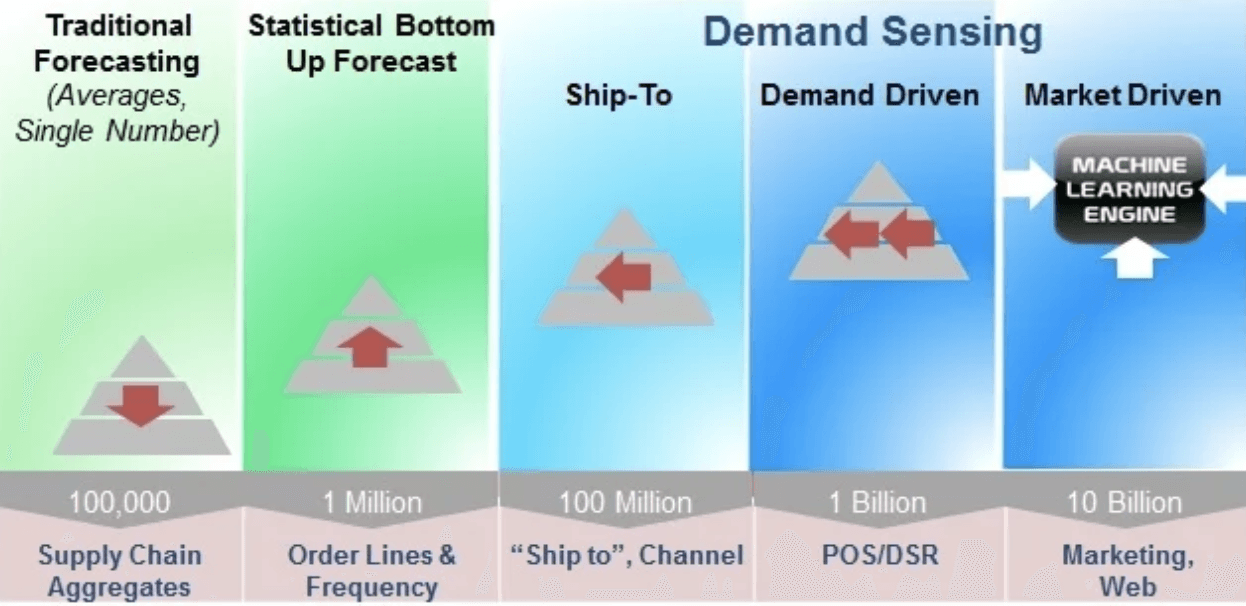 The result can be clearly seen in performance. Right hand batters perform significantly better against left handed pitchers because they can see the ball coming off the pitcher’s hand a split second sooner than left handed batters (The same is true for left handed batters and right handed pitchers).
This ability to sense what is happening as soon as possible is critical to the success of any professional athlete in almost any sport. And it matters in supply chain too. Being able to sense demand a little sooner, a little faster, has a similar impact on forecasting and supply chain performance. As you’d expect, sensing demand is exactly what many more advanced – and higher performing — demand forecasters are doing.
We’ll look at this phenomenon at three levels of skill and performance:
The result can be clearly seen in performance. Right hand batters perform significantly better against left handed pitchers because they can see the ball coming off the pitcher’s hand a split second sooner than left handed batters (The same is true for left handed batters and right handed pitchers).
This ability to sense what is happening as soon as possible is critical to the success of any professional athlete in almost any sport. And it matters in supply chain too. Being able to sense demand a little sooner, a little faster, has a similar impact on forecasting and supply chain performance. As you’d expect, sensing demand is exactly what many more advanced – and higher performing — demand forecasters are doing.
We’ll look at this phenomenon at three levels of skill and performance:
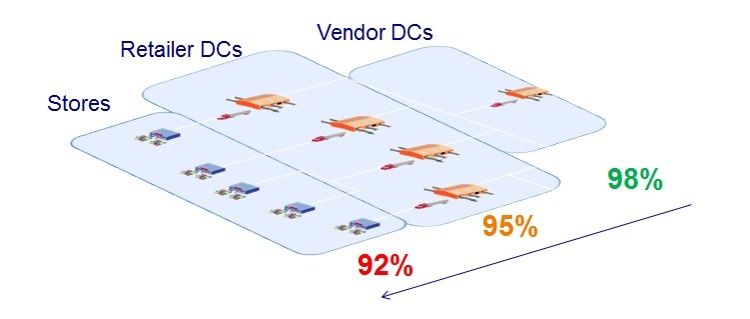 What was happening? Fulfillment was being driven by the vendor based on aggregated data and latency introduced with each additional echelon. The vendor was fulfilling the demand they were seeing, but it wasn’t the demand the retail stores were experiencing. So the further away the point of demand, the worse the signal, the worse the forecast, and the worse the service level performance at the point of sale.
So what’s the next step? Next week we’ll see how the best forecasters are overcoming this problem.
Click below to download a copy of an eBook on Demand Sensing.
What was happening? Fulfillment was being driven by the vendor based on aggregated data and latency introduced with each additional echelon. The vendor was fulfilling the demand they were seeing, but it wasn’t the demand the retail stores were experiencing. So the further away the point of demand, the worse the signal, the worse the forecast, and the worse the service level performance at the point of sale.
So what’s the next step? Next week we’ll see how the best forecasters are overcoming this problem.
Click below to download a copy of an eBook on Demand Sensing.
The result can be clearly seen in performance. Right hand batters perform significantly better against left handed pitchers because they can see the ball coming off the pitcher’s hand a split second sooner than left handed batters (The same is true for left handed batters and right handed pitchers).
This ability to sense what is happening as soon as possible is critical to the success of any professional athlete in almost any sport. And it matters in supply chain too. Being able to sense demand a little sooner, a little faster, has a similar impact on forecasting and supply chain performance. As you’d expect, sensing demand is exactly what many more advanced – and higher performing — demand forecasters are doing.
We’ll look at this phenomenon at three levels of skill and performance:
- Sensing channel demand
- Sensing demand at the customer
- Sensing demand before it happens (we’ll explain later)
What was happening? Fulfillment was being driven by the vendor based on aggregated data and latency introduced with each additional echelon. The vendor was fulfilling the demand they were seeing, but it wasn’t the demand the retail stores were experiencing. So the further away the point of demand, the worse the signal, the worse the forecast, and the worse the service level performance at the point of sale.
So what’s the next step? Next week we’ll see how the best forecasters are overcoming this problem.
Click below to download a copy of an eBook on Demand Sensing.