Multi-Echelon Inventory Optimization: Benefits & Best Practices


Introduction
Multi-echelon inventory optimization (MEIO) is a powerful supply chain strategy that manages stock across every level of your network—from central warehouses to regional hubs and retail outlets. Unlike traditional methods, multi-echelon inventory optimization treats the entire supply chain as a connected system. By analyzing inventory movement between echelons, multi-echelon inventory optimization determines the best stock positioning to meet customer demand at the lowest total cost. The goal is to balance service levels, working capital, and risk across all tiers, supporting reliable availability with minimal excess inventory.
What is Multi-Echelon Inventory Optimization?
Multi-echelon inventory optimization balances service levels, working capital, and risk across all tiers, supporting reliable availability with minimal excess inventory. This holistic approach is essential for complex supply networks with global sourcing, omnichannel fulfillment, and variable customer expectations.
How Does Multi-Echelon Inventory Optimization Work?
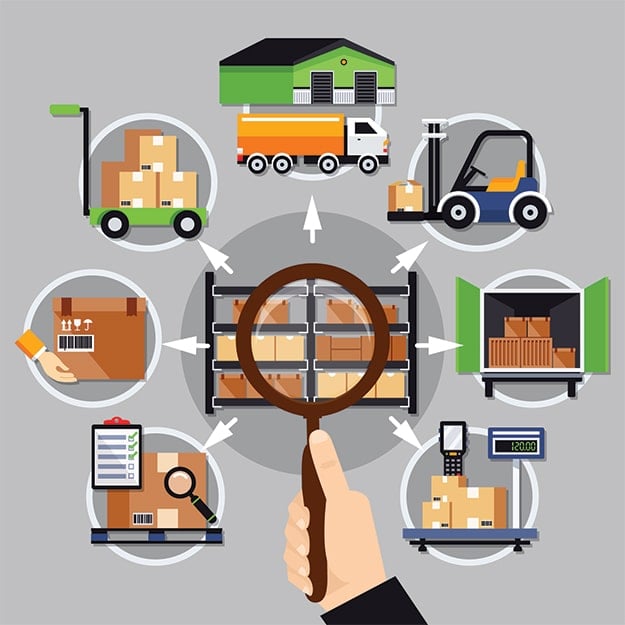
Multi-echelon inventory optimization uses advanced modeling and AI to simulate inventory behavior across multiple supply chain stages. It factors in demand variability, supplier lead times, transportation constraints, and service level targets to calculate ideal stock levels for each location.
Unlike static safety-stock rules, multi-echelon inventory optimization continuously adapts to real-world conditions. For example, if a central warehouse can respond quickly to a region’s demand, the system may hold less stock locally and more upstream. If transportation or supplier lead times are uncertain, the model compensates automatically.
ToolsGroup’s approach leverages machine learning to refine calculations, learning from actual demand signals, improving forecast accuracy over time, and automatically adjusting inventory policies as conditions change. The result is a more resilient, responsive, and cost-efficient supply chain.
When Should You Use Multi-Echelon Inventory Optimization?
Multi-echelon inventory optimization is most valuable for supply chains with multiple layers or regions, especially when existing planning methods fail to balance cost and service performance. It’s ideal for organizations facing frequent demand changes, long lead times, or excess working capital tied up in the wrong places.
Consider multi-echelon inventory optimization if:
- Service levels vary widely between locations despite similar demand.
- Excess safety stock exists in some nodes, yet stockouts occur elsewhere.
- Expansion into new markets or distribution centers requires a connected planning model.
- You want to improve responsiveness without increasing inventory.
Industries like manufacturing, retail, spare parts, and consumer goods benefit most, especially when interdependencies between central and regional inventories are high
Companies often realise the need for MEIO when traditional, single-echelon models start showing their limits – for example, when a local stock issue causes ripple effects throughout the network or when planners can’t manually coordinate multiple tiers of demand.
By moving to a multi-echelon approach, businesses gain the ability to manage the entire system rather than fighting fires in individual warehouses or regions.
Benefits of Multi-Echelon Inventory Optimization
The main advantage of multi-echelon inventory optimization is achieving the right balance between service and efficiency across your entire supply chain. By modelling inventory as a connected system rather than isolated points, it delivers measurable gains in both cost and reliability.
Key benefits include:
- Lower total inventory: Reduce safety stock duplication, typically cutting inventory by 15–30% while maintaining or improving service levels
- Higher service consistency: Achieve service-level targets above 98%, even with demand fluctuations.
- Improved working capital and cash flow: Free up cash for other priorities without compromising performance.
- Better alignment across teams: Planners, procurement, and logistics work from the same model, reducing manual intervention and conflicting decisions.
- Faster response to change: AI-driven models react quickly to new demand signals, supply constraints, or transportation delays, supporting more resilient operations.
A well-implemented MEIO solution allows businesses to serve customers faster, with less capital tied up and fewer surprises across the network. For global or multi-channel operations, these gains often translate into millions saved annually and stronger competitive advantage.
Implementation Best Practices for Multi-Echelon Inventory Optimization
Implementing multi-echelon inventory optimization is not just about adding new software. It’s about creating a connected planning process that brings data, teams, and decision logic together. Success depends on starting with the right foundation and avoiding common pitfalls.

Steps to get started:
- Integrate clean, reliable data: Bring together demand, supply, and lead-time data from across your ERP, WMS, and forecasting systems. Poor data quality is one of the biggest barriers to accurate optimization.
- Define clear service targets: Set measurable goals for customer service levels, response times, and working capital so the optimization has the right objectives.
- Run scenario testing: Use simulations to compare “what-if” scenarios – such as changing supplier lead times or regional demand spikes – to validate the model before rollout.
- Start with a pilot: Choose a representative business unit or product line to build confidence, refine the model, and show quick wins before scaling.
- Keep it dynamic: Treat MEIO as a continuous process rather than a one-time project. Regularly update parameters and use AI insights to adapt to real-world changes.
Common pitfalls to avoid:
- Implementing MEIO without aligning demand forecasting or replenishment processes.
- Overcomplicating models before data and governance are mature.
- Ignoring change management and training needs for planners and supply teams.
Pairing MEIO with demand forecasting and automation tools produces the best outcomes. When forecasting, replenishment, and optimization work together, planners can focus less on firefighting and more on strategic decisions that drive lasting performance improvements.
ToolsGroup’s Approach to Multi-Echelon Inventory Optimization
ToolsGroup’s multi-echelon optimization solution combines advanced analytics, probabilistic forecasting, and automation for smarter inventory decisions across complex networks. It’s designed to help businesses manage uncertainty while maintaining customer promises with minimal stock investment.
What sets ToolsGroup apart:
- Probabilistic forecasting: Rather than relying on a single forecast number, ToolsGroup models the full range of possible demand outcomes. This allows for more accurate safety-stock settings that reflect real-world uncertainty.
- Automated policy optimisation: The system continuously recalculates optimal stock targets and reorder points for every node in the network, adjusting to new data automatically.
- AI-driven learning: Machine learning algorithms refine the model over time, improving forecast accuracy and service performance with every planning cycle.
- Integration with broader planning: MEIO is built into ToolsGroup’s comprehensive supply chain planning suite, connecting seamlessly with demand planning, S&OP, and replenishment processes.
The result is a self-learning, adaptive supply chain that can handle complexity at scale. Businesses using ToolsGroup typically achieve faster planning cycles, lower inventory costs, and more consistent service levels across regions.
By combining visibility, automation, and AI intelligence, ToolsGroup helps supply chains become truly resilient, ready for disruption, yet always optimised for performance.
If your supply chain spans multiple sites, channels, or regions, multi-echelon inventory optimization can unlock significant efficiency and service gains. The key is starting with the right technology and expertise to make it work in the real world.
ToolsGroup helps leading global brands transform inventory performance through advanced AI, automation, and probabilistic planning. Whether you want to reduce working capital, improve service reliability, or increase supply chain resilience, our MEIO solution delivers measurable results fast.
See it in action:
- Explore our Inventory Optimization Demo to see how AI-driven planning works across your entire network.
- Read our customer success stories to learn how organisations cut inventory by up to 30% while achieving 98%+ service levels.
- Or book a consultation with our experts to discuss how MEIO can be tailored to your supply chain challenges.
FAQs
What’s the difference between multi-echelon and network optimization?
Multi-echelon optimization focuses on how inventory is positioned across multiple levels of the supply chain to meet service targets efficiently. Network optimization, on the other hand, looks at the physical structure of the network itself – such as the number and location of warehouses or transport routes. Both approaches work best when used together to balance structure and flow.
How long does it take to see results from MEIO?
Most organisations begin seeing measurable results within a few months of implementation, particularly when starting with a pilot region or product line. As the model matures and more data feeds in, accuracy and savings continue to improve.
Does MEIO replace my existing planning or ERP system?
No. Multi-echelon optimization works alongside existing ERP, forecasting, and planning tools. It uses data from these systems to recommend optimal inventory targets, which can then be executed in your current workflow.
How does AI improve MEIO accuracy?
AI enhances MEIO by learning from patterns in demand, supply, and lead-time variability. Over time, it automatically adjusts safety-stock levels, identifies hidden dependencies, and improves forecast precision – all without manual intervention.
Is MEIO suitable for smaller supply chains?
While it’s often associated with large networks, MEIO is equally valuable for smaller organisations with multiple stocking locations or product lines. Any business that wants to cut inventory costs while maintaining reliability can benefit.