
Effective demand planning software is essential for businesses managing short and unpredictable product life cycles. A well-structured demand forecasting strategy for new product introductions (NPI) should address two key aspects:
 Modern machine learning demand forecasting solutions enhances this process by analyzing product features and grouping SKUs based on sales profiles. This automated approach improves forecasting accuracy, reducing reliance on manual processes.
Another powerful methodology is Attribute-Based Forecasting (ABF), where statistically tested attributes—such as color, size, or market demand factors—inform predictive models. AI-driven algorithms further refine these forecasts by identifying the most relevant attributes, leading to optimized inventory planning and reduced excess stock. A case study from Aston Martin highlights the effectiveness of machine learning-driven clustering in demand planning best practices.
Modern machine learning demand forecasting solutions enhances this process by analyzing product features and grouping SKUs based on sales profiles. This automated approach improves forecasting accuracy, reducing reliance on manual processes.
Another powerful methodology is Attribute-Based Forecasting (ABF), where statistically tested attributes—such as color, size, or market demand factors—inform predictive models. AI-driven algorithms further refine these forecasts by identifying the most relevant attributes, leading to optimized inventory planning and reduced excess stock. A case study from Aston Martin highlights the effectiveness of machine learning-driven clustering in demand planning best practices.

- Baseline Demand Forecasting – Estimating long-term sales at normal operating capacity.
- Launch Demand Profile – Predicting demand patterns during the initial introduction phase.
Establishing Baseline Demand for New Products
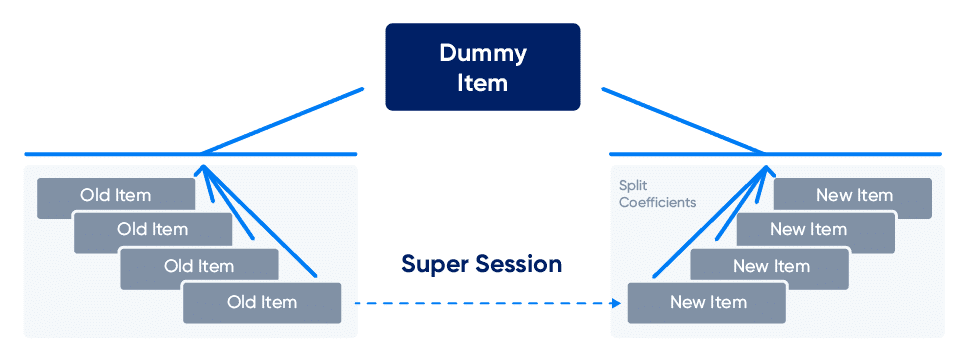
Forecasting baseline demand for new products is challenging due to the absence of historical sales data. A common approach is leveraging data from similar products. If a new product replaces an existing one, historical sales data from the previous item can serve as a foundation-this process is known as supersession modeling. When no direct substitute exists, attribute-based clustering identifies demand characteristics. By grouping products with similar attributes—such as quality, price, or promotional response—businesses can generate forecasts for new products using a “dummy item” approach.
Modern machine learning demand forecasting solutions enhances this process by analyzing product features and grouping SKUs based on sales profiles. This automated approach improves forecasting accuracy, reducing reliance on manual processes.
Another powerful methodology is Attribute-Based Forecasting (ABF), where statistically tested attributes—such as color, size, or market demand factors—inform predictive models. AI-driven algorithms further refine these forecasts by identifying the most relevant attributes, leading to optimized inventory planning and reduced excess stock. A case study from Aston Martin highlights the effectiveness of machine learning-driven clustering in demand planning best practices.
Defining the Demand Profile During Product Launch
The launch phase often experiences volatile demand, making accurate forecasting essential—especially in industries like consumer technology and fashion retail. Traditional methods struggle with rapid fluctuations, but AI-powered demand forecasting software leverages real-time data insights to predict demand peaks with precision. Advanced supply chain management software integrates early indicators, such as:- Web traffic and product page visits
- Social media engagement
- Control group analysis
- External market data sources
Real-World Applications of AI-Driven Demand Forecasting
A global eyewear leader introducing 2,000 new styles annually faced persistent challenges in demand forecasting for new product launches. By implementing AI-powered demand clustering, the company reduced its Weighted Mean Absolute Percent Error (WMAPE) by 10% and improved new launch forecasts by 30%. Similarly, an electronics wholesaler launching over 50,000 products annually utilized web analytics and product attributes to refine its supply chain optimization strategy. By leveraging machine learning, the company achieved an 85% accuracy rate in predicting product performance, leading to a 15% improvement in five-month forecast accuracy and better identification of high- and low-performing products.Enhancing Forecast Accuracy with Collaborative Insights
For optimal results, businesses should integrate statistical forecasting techniques with cross-functional collaboration. A two-step approach can significantly enhance forecast accuracy:- Generate an initial statistical forecast using AI-powered demand forecasting software.
- Refine the forecast through collaboration with stakeholders, including sales teams, market research analysts, and external partners.