Customer Story
Kotsovolos
How Kotsovolos Keeps Shelves Stocked With AI-Driven Forecasting and Autonomous Replenishment
Kotsovolos (part of the PPC, the Public Power Corporation Group) is a market-leading retailer of consumer electrical and electronic goods in Greece, with a growing presence in Cyprus. Operating more than 100 stores and roughly 20,000 SKUs across a complex distribution network, the company strengthened its planning with AI-driven demand forecasting and probabilistic planning to sustain high availability and a consistently strong customer experience.


Results at a Glance
The transformation delivered rapid and measurable results across availability, speed and accuracy.
Shelf Out-of-Stock
40% reduction in shelf out-of-stock instances
Replenishment Cycle
Accelerated by one full day, getting inventory to stores sooner
Human Errors
Reduced to zero: wrong SKUs, duplicate orders and duplicate shipments
Store-to-HQ Communications
95% decrease in replenishment-related communications
Network Visibility
A unified, network-wide view of on-shelf availability
A Manual, Spreadsheet-Bound Planning Process
Kotsovolos's legacy demand planning process relied heavily on Excel spreadsheets and manual effort. Planners had to gather, reconcile, and interpret data across sales, inventory, and orders by hand, a process that quickly became unsustainable at scale. With more than a hundred stores and tens of thousands of SKUs, this approach introduced frequent errors and inefficiencies. Planners struggled to determine optimal replenishment quantities for each store, leading to stockouts in high-value categories such as large appliances, as well as unintended duplicate shipments. Maintaining the right product assortment in line with commercial strategy added further complexity.
Compounding these issues, the lack of an integrated planning system meant there was no single version of the truth for on-shelf availability. Store managers regularly contacted headquarters to report stock issues, duplicating effort and consuming valuable time. The central planning team spent hours reacting to issues instead of focusing on strategic analysis and coordination. These challenges highlighted the need for a more automated, data-driven planning solution capable of supporting Kotsovolos's scale and growth ambitions.

Probabilistic Planning as the Intelligent Core
To address these challenges, Kotsovolos implemented ToolsGroup's supply chain planning suite, in partnership with local ToolsGroup partner THellas, to overhaul its demand forecasting, replenishment, and inventory optimization processes. The solution now serves as the intelligent core of Kotsovolos's planning operations, with the vast majority of planning activities executed within ToolsGroup's solution and minimal reliance on spreadsheets.
At the heart of the solution is probabilistic forecasting, which models demand as a range of possible outcomes rather than a single forecast. This probabilistic planning approach allows Kotsovolos to explicitly account for uncertainty and variability when setting inventory targets and generating replenishment plans, improving service levels while controlling inventory risk.
The platform automatically ingests daily data from SAP and other enterprise sources, including store-level sales, inventory positions, product master data, promotions, and customer orders. Using probabilistic forecasting at the item-store level, and incorporating the commercial team's input on short-term and medium-term events pertaining to the sales forecast, the system dynamically optimizes inventory targets to meet service-level objectives while generating daily replenishment recommendations and supplier order proposals with up to 180 days of forward visibility.
Key capabilities include:
- Automated daily data ingestion from SAP and connected systems
- Probabilistic forecasting at item-store level
- Dynamic inventory target optimization
- Daily replenishment and supplier order proposals
- Assortment and planogram rule enforcement
- Integration of digital shelf and store "digital twin" signals to prevent duplicate or incorrect replenishment
Implementation approach
A critical focus of the implementation was automating store replenishment for Major Domestic Appliances (MDA), a category characterized by high-value, bulky products, and strict assortment rules. ToolsGroup's advanced modelling enforces each store's approved product mix and planogram rules as defined by Kotsovolos's commercial team, ensuring that only the correct products and quantities are replenished. Apart from the MDA category, ToolsGroup's solution helps Kotsovolos manage day-to-day planning for nine product categories, including Small Domestic Appliances, Computing and Telecoms, each with their unique demand and supply characteristics.
Each night, the system evaluates on-shelf conditions using system data and digital store representations. When preferred items are unavailable, the solution recommends suitable alternatives to avoid empty shelves and automatically switches back to the preferred model when stock is restored. Integration with electronic shelf labels and store digital twin data enables the system to detect incorrect shelf usage and halt unnecessary replenishment, eliminating a common source of duplicate shipments.
This exception-driven planning approach allows planners to focus on root cause analysis and cross-functional decision-making rather than manual calculations, improving both efficiency and planning quality.
Projects like this are a journey. Working closely with Kotsovolos, we progressively refined models, data, and ways of working as the business evolved. This collaborative approach, combined with a strong focus on governance and continuous improvement, enabled the team to deliver sustained progress in on-shelf availability and replenishment effectiveness.
Stathis Nikolakopoulos, Managing Director, THellas
For us, AI is not just a technology choice, it's a strategic imperative. By harnessing intelligence and automation in our planning tools, we've sharpened planning accuracy and freed our people to focus on higher-value work, ultimately elevating the customer experience.
Rapid, Measurable Impact
The transformation delivered rapid and measurable results. Kotsovolos reduced shelf out-of-stock instances by 40%, significantly improving product availability for customers, particularly in high-value appliance categories. Faster, more responsive planning accelerated replenishment cycles by a full day, enabling stores to receive inventory sooner and respond more effectively to demand fluctuations.
Equally impactful was the elimination of human errors. Issues such as incorrect SKUs, duplicate orders, and unnecessary shipments were reduced to zero through automated rules and system checks. As confidence in the replenishment process increased, store-to-HQ communications related to stock issues dropped by 95%, freeing both store staff and central teams to focus on more value-adding activities.
Beyond efficiency gains, Kotsovolos credits the initiative with driving a cultural shift within the supply chain organization. With routine tasks automated and reliable insights available, planners have moved from reactive firefighting to proactive optimization, working more closely with commercial teams to ensure the right assortment is always available to customers. This data-driven, customer-centric mindset has cemented the supply chain function as a strategic enabler of growth rather than a back-office operation.
About Kotsovolos
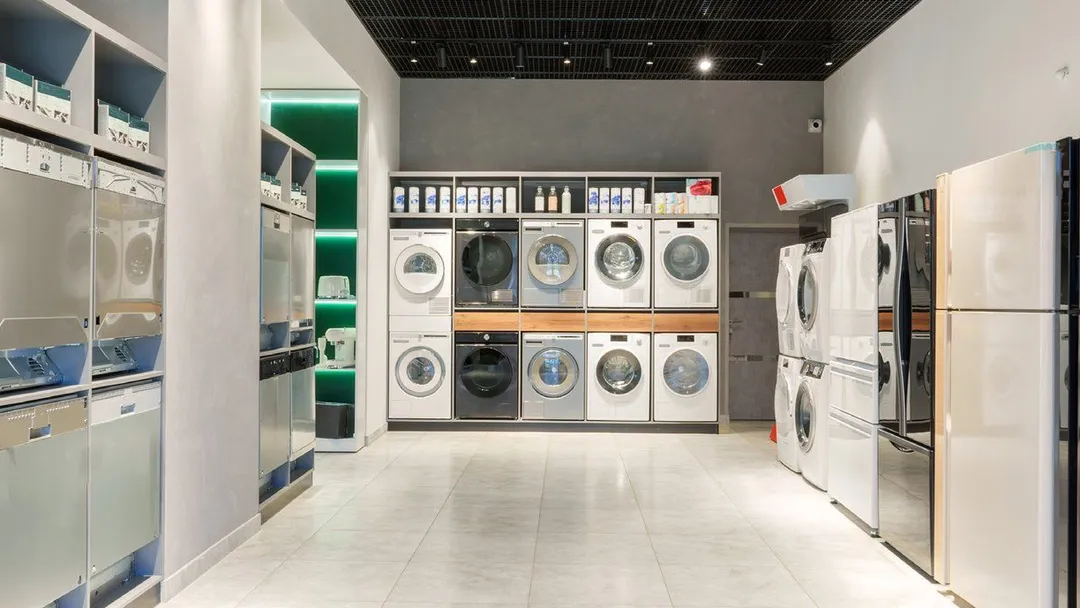
Kotsovolos (part of the PPC, the Public Power Corporation Group) is a market-leading retailer of consumer electrical and electronic goods in Greece, with a growing presence in Cyprus. The company operates more than 100 stores of various formats, from large flagship outlets to smaller "K Spot" concept stores, and manages a complex distribution network of 2 central distribution centres, 10 regional hubs and 9 fulfilment centres. With roughly 20,000 SKUs active across appliances, consumer electronics, telecom, computing and gaming, and up to ~40,000 units replenished to stores every day, Kotsovolos runs a true multichannel business, serving customers through physical stores, a thriving e-commerce platform, online marketplaces, and B2B and B2G channels.