Customer Story
Sapore di Mare
How Demand-Driven Planning Reduced Inventory by 30% in Food Retail
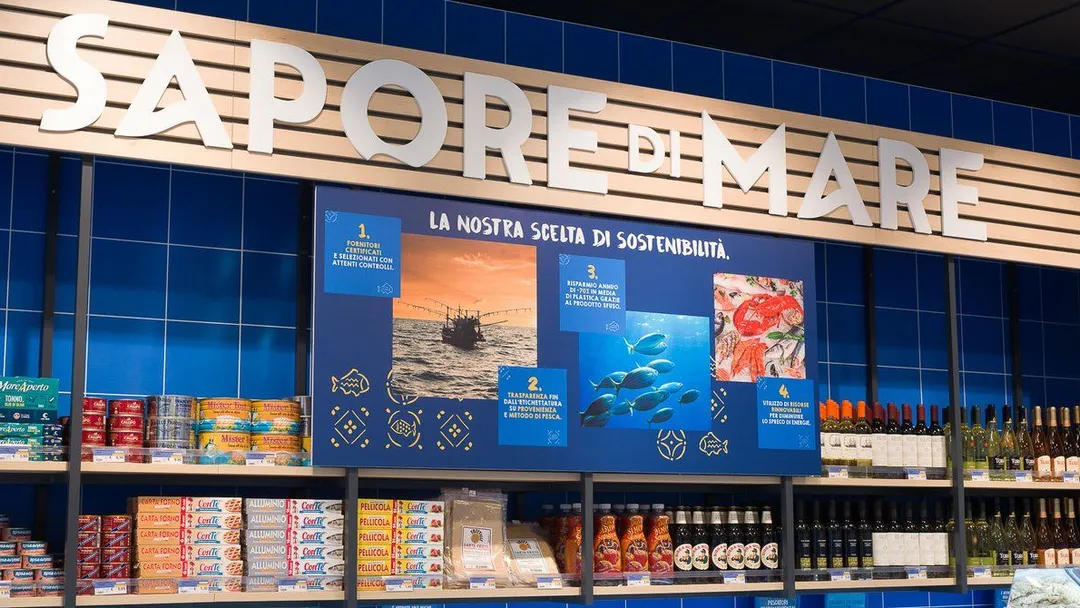
Sapore di Mare (D.I.MAR. s.r.l.) is an Italian specialist in frozen seafood retail, with a nationwide network of around 100 points of sale. By adopting demand-driven planning with ToolsGroup, it shifted from a largely push-based approach to a pull model guided by store-level forecasts, reducing central warehouse inventory while maintaining sales volumes and improving day-to-day operational control.

Results at a Glance
Sapore di Mare achieved measurable improvements across inventory, service control and operational efficiency.
Central Warehouse Inventory
Up to 35% reduction while maintaining sales volumes
Weekly Sell-out Deviation
Stabilized to roughly ±3% in kilograms
Network Scale
~100 points of sale nationwide
Implementation
2-month pilot plus 5-month rollout
Structurally High Inventory and Limited Control
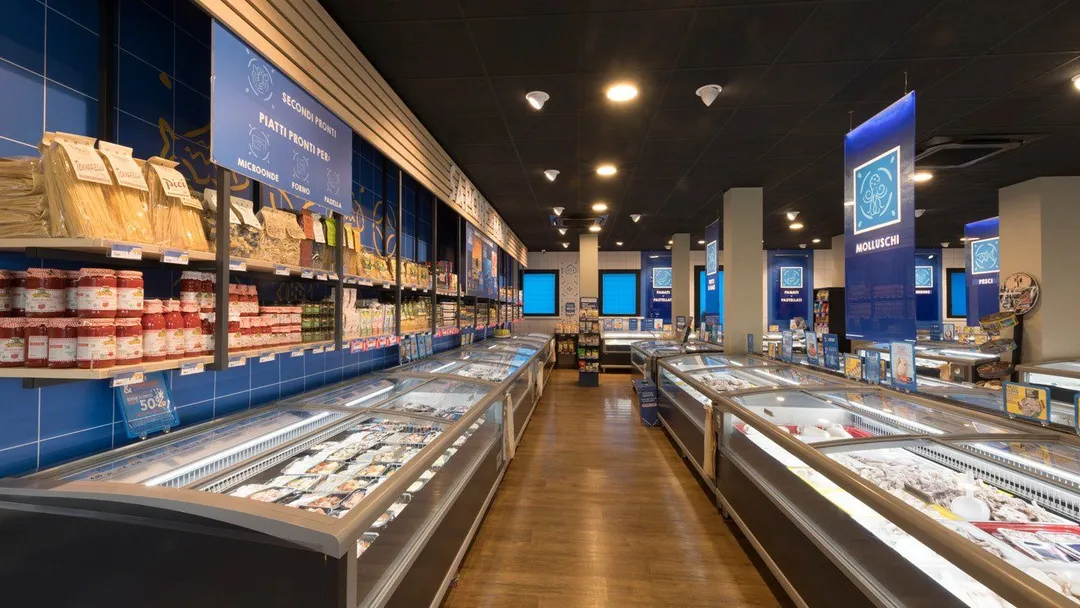
Frozen seafood retail requires excellent availability without compromising freshness or tying up excess working capital. For Sapore di Mare, complexity is amplified by promotion-driven sales (including cashback initiatives), a wide assortment that demands high performance for every SKU, and the need to manage three temperature regimes in parallel (frozen, ambient, and zero-degree).
Before the transformation, planning was largely push-based and driven mainly by historical averages. Store replenishment involved significant manual activity, and the organization had limited ability to react quickly when demand deviated from plan. The impact was visible: structurally high inventory, especially at the central warehouse, alongside stock-outs and replenishment delays at store level, and limited control over coverage and service levels across a network of ~100 stores.
A Demand-Driven Operating Model
To address these challenges, Sapore di Mare implemented ToolsGroup's solution to support a demand-driven operating model, combining store-level forecasting with automated replenishment to balance availability, freshness and working capital. The objective was not only to improve planning accuracy, but to create a governance model where the organization could actively steer service level and inventory, rather than absorbing uncertainty with additional stock.
Integrated Planning Ecosystem: ToolsGroup became the engine for store-level demand forecasting and pull-based replenishment from the central warehouse to the point of sale. This enabled daily, item-level visibility and more consistent decision-making across the network. Outputs from ToolsGroup supported central governance of inventory and service targets, helping Sapore di Mare standardize assortment and replenishment logic across stores while staying responsive to promotions and demand swings. Reporting and visibility were further supported through the company's analytics environment (including Power BI).
Ways of Working and Process Integration: The shift to demand-driven planning also changed how teams worked together. Central HQ gained clearer ownership of stock and service levels, enabling more consistent, data-driven daily decisions. Coordination between Supply Chain and Sales strengthened to better plan and manage promotions and initiatives that significantly influence demand. At store level, replenishment became more standardized and less dependent on manual judgement, helping the organization respond faster when demand patterns changed.
ToolsGroup's Role: ToolsGroup enabled Sapore di Mare to move beyond forecasting based on historical averages and adopt probabilistic, store-level demand planning. This supported a pull-based replenishment model where expected demand and service targets drive replenishment from the central warehouse to stores. With daily, item-level visibility, planners can better anticipate variability caused by promotions and rapidly changing demand patterns, while standardizing replenishment and assortment logic across a large network. Over time, the organization used this foundation to continuously optimize inventory, improve freshness, and strengthen decision-making across Supply Chain and Sales.
Demand-driven planning helped us regain control over inventory and service, significantly reduce stock, and stabilize performance, even in a promotion-heavy, multi-temperature supply chain. If we could go back in time, we'd tell ourselves: relax, it's the right road. It was a good investment.
Measurable Gains Across Inventory, Service and Efficiency
Sapore di Mare achieved measurable improvements across inventory, service control and operational efficiency:
- Inventory reduction at the central warehouse, up to 35%: By moving to demand-driven, pull-based replenishment, Sapore di Mare reduced inventory held at the central distribution center by up to 35%, while maintaining sales volumes.
- Performance stabilized, roughly ±3% weekly sell-out deviation (kg): Store-level forecasting helped stabilize performance even in a highly promotional environment, with weekly sell-out deviations of roughly ±3% in kilograms.
- Freshness and coverage control: Tighter control of coverage improved freshness and reduced situations of excess stock or missing items on shelf, critical in a category with shelf-life constraints and multiple temperature regimes.
- Operational improvements beyond inventory: The new model also improved truck planning and load saturation, strengthened visibility into store-level stock-outs, supported better promotion cost control, and helped align kits/recipes with component availability, creating a foundation for continuous optimization.
With demand-driven planning in place, Sapore di Mare moved from reactive execution to a more structured and governable model. The organization can now actively balance availability and inventory across its multi-temperature network, improving freshness and stabilizing performance even when promotions create sharp shifts in demand.
About Sapore Di Mare
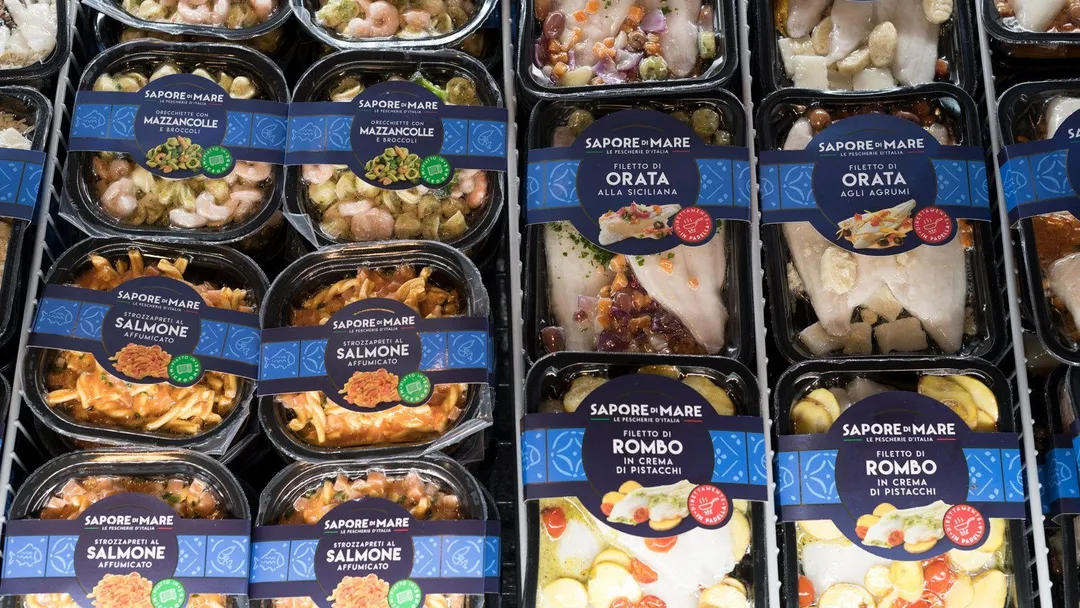
Sapore di Mare is an established Italian leader in frozen seafood retail, with over 30 years of experience and a network of nearly 100 points of sale across Italy. The company employs around 450 people and reports annual revenue of approximately €60M to €80M. Beyond retail, D.I.MAR. also operates a production facility dedicated to processing bulk products and prepared foods, supplying both its stores and other distribution channels. Its private-label range includes around 150 SKUs, within an overall assortment of more than 1,000 SKUs.